
EPILOGUE
There is a photo that should exist but doesn’t.
It should show two men — one American, one Serbian — standing on the plateau at Pranjani in the summer of 1944, looking at the dirt airstrip their hands built together. The American is a pilot, maybe twenty-two, still wearing his flight suit, blinking in the August light after weeks in the mountains. The Serbian is a farmer, maybe forty, wearing the peasant clothes he worked in the night they hacked this runway flat. They don’t share a language. They are standing in occupied territory, under German death sentences. The war is not over.
They are grinning at each other like brothers.
The photo doesn’t exist because there were no cameras. The mission was unofficial, unacknowledged, deliberately obscured by the political machinery of the Allied command. The men who flew out of Pranjani came home to families who were told only that they had been rescued; the men who built the airstrip went back to their villages and waited for a recognition that never officially came.
But the moment happened. Five hundred and twelve times it happened, in the darkness and the noise of C-47 engines and the handshakes and the looks between men who knew what they had just done for each other.
That moment is our inheritance. That is what this book has been building toward.
The Vow
American and Serbian Christians share, in the structural sense, the same core conviction: that there is a kingdom above all earthly kingdoms, that it is worth dying for, that it outlasts empires, and that the men who serve it are not ultimately defined by their nationality but by the allegiance that supersedes all others.
This was demonstrated at Kosovo in 1389, when a Serbian prince chose the heavenly kingdom over earthly survival.
It was demonstrated at Valley Forge in 1777, when an American general held a freezing army together with sheer refusal to accept defeat.
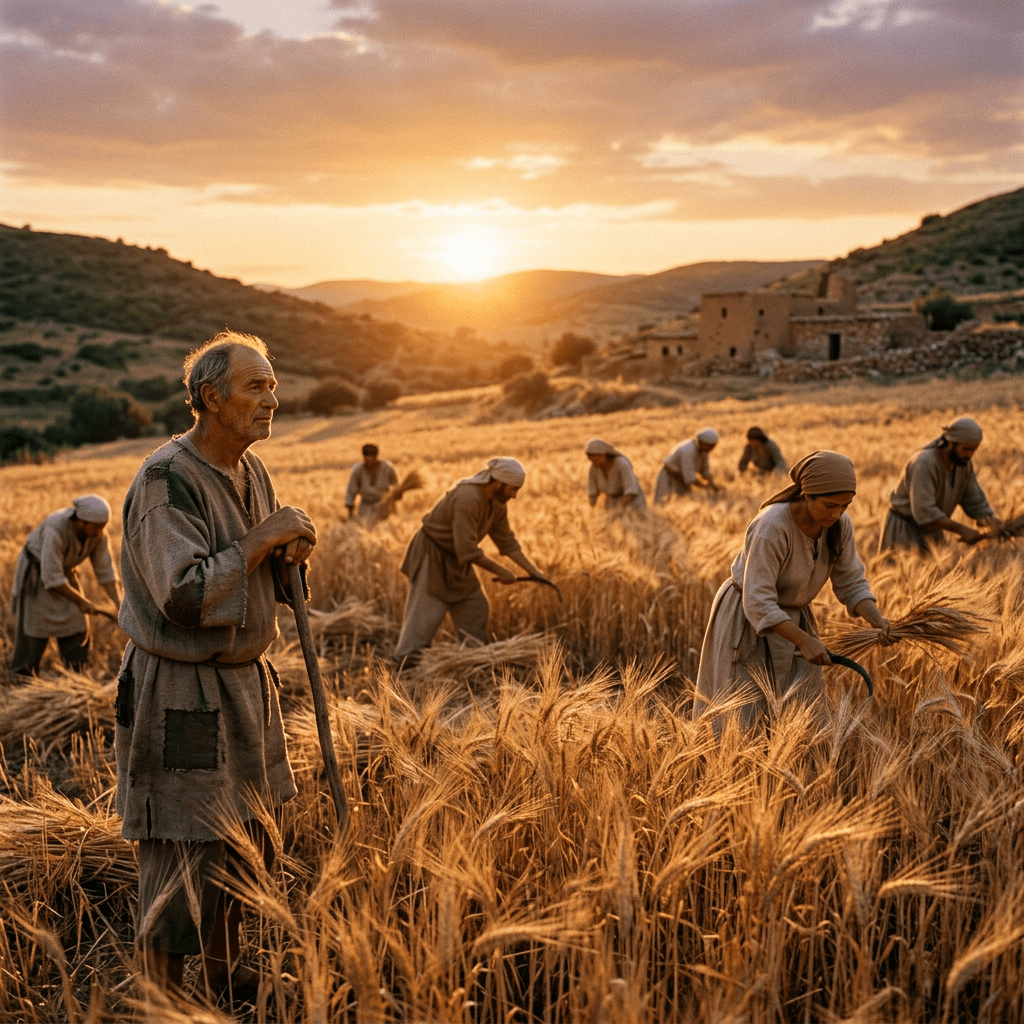
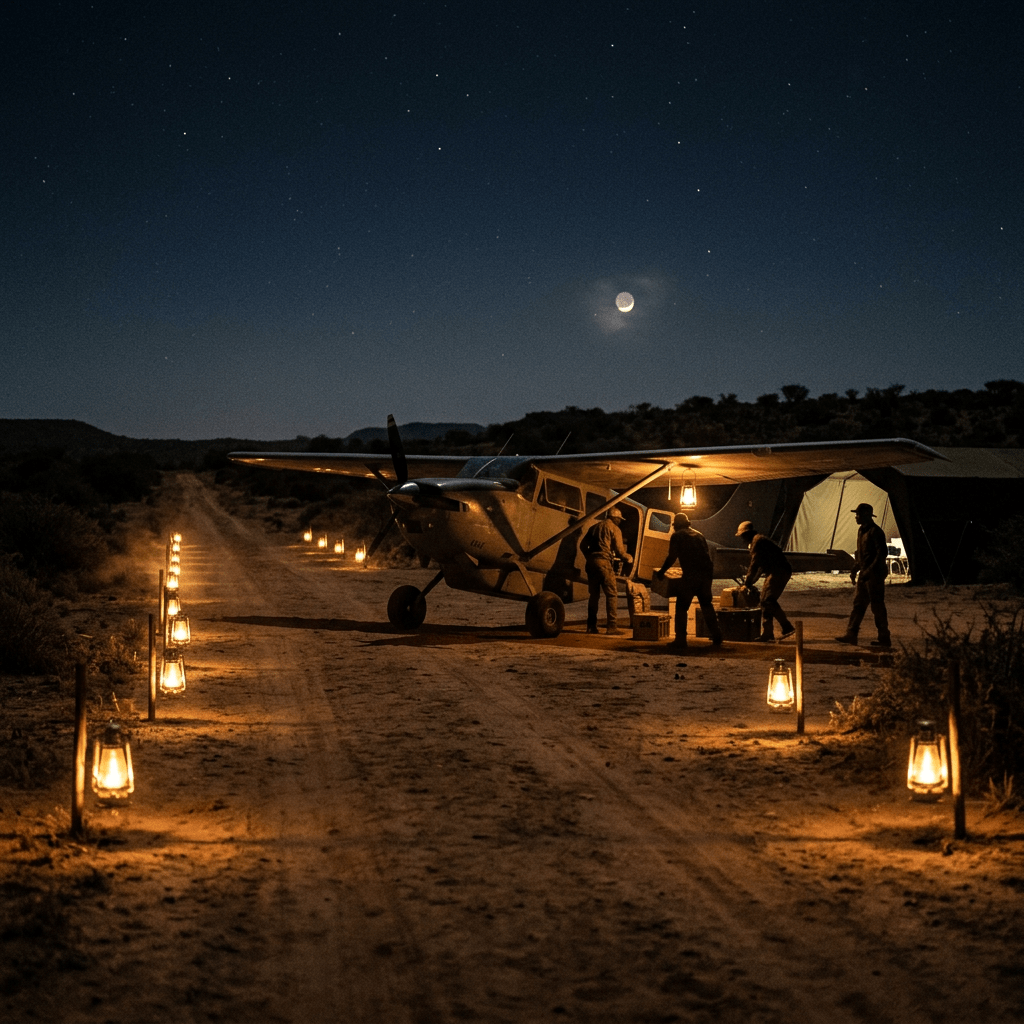
It was demonstrated at Pranjani in 1944, when Serbian farmers built an airstrip by hand for American strangers, and American pilots flew into the dark to bring them home.
It was demonstrated every time, in every century, when the faith survived the machinery trying to destroy it — Ottoman, Habsburg, Nazi, Communist, and now the softer, more patient machinery of cultural dissolution.
The vow of this epilogue is simple:
America and Serbia — Halyard heirs and Tesla’s torchbearers — will not raise weapons against each other again. What was broken in 1999 we acknowledge honestly and grieve honestly and then we bury it in the same ground where Pranjani’s farmers buried their labor and their names. We are blood brothers. Not by sentiment but by sacrifice.
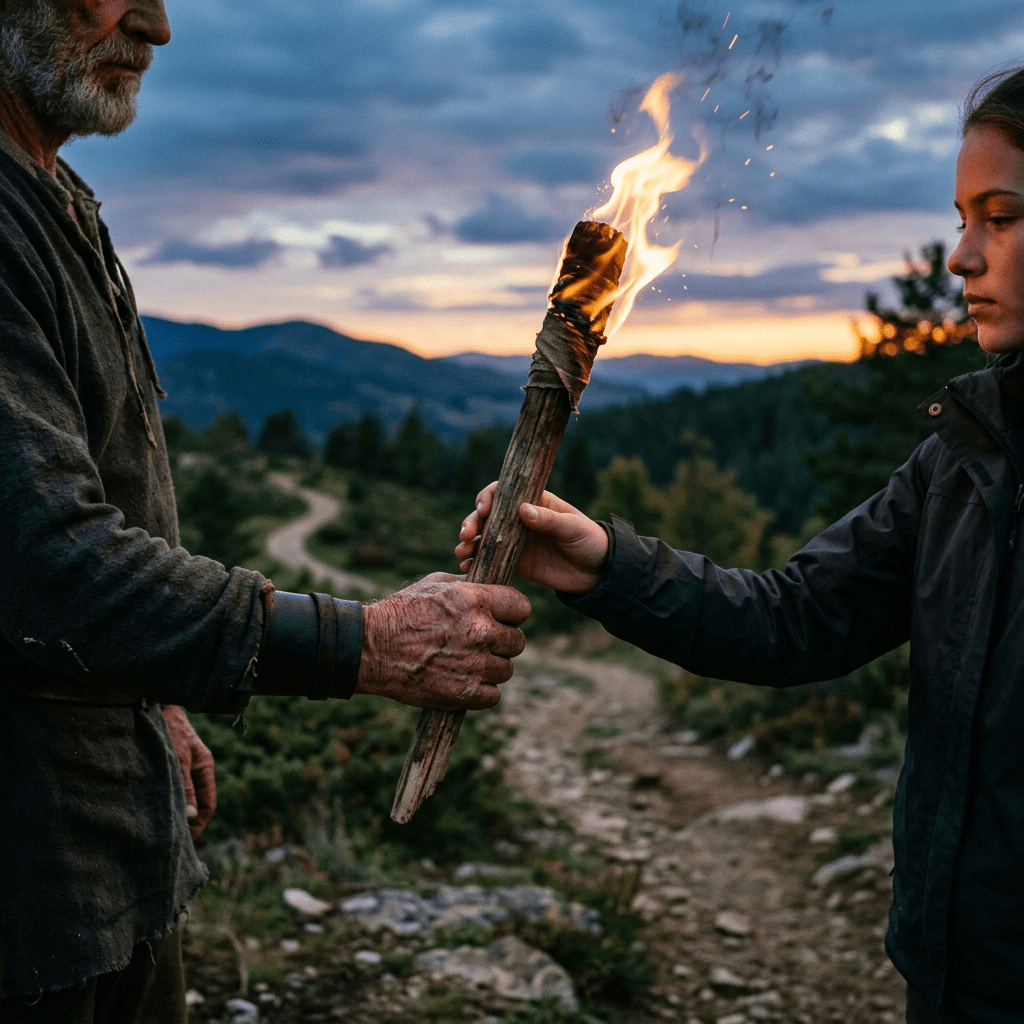
We will build what needs to be built. We will defend what needs to be defended. We will pass the torch without dropping it.
We will not let the next generation inherit the fratricidal wound. We will give them the bond.
Tesla’s Current, Pupin’s Wire
Nikola Tesla was born in Smiljan, in what is now Croatia, to a Serbian Orthodox priest. He died in Room 3327 of the New Yorker Hotel in Manhattan, American citizen, alone, having given the 20th century its electrical infrastructure and received very little of the credit while alive.
Mihajlo Pupin was born in Idvor in the Banat, in what is now Serbia. He arrived in America in 1874 with five cents in his pocket, speaking no English. He eventually held the chair of electromechanics at Columbia University, held over thirty patents, won the Pulitzer Prize for his autobiography From Immigrant to Inventor, and developed the loading coil that made long-distance telephone communication possible.
These two men — both Serbian, both American, both Orthodox Christians, both transformers of the civilization that adopted them — are not footnotes in American history. They are its electrical grid and its telephone network. Every time a light comes on or a voice travels a wire, it is traveling through infrastructure built by men who brought the Balkan cross with them to the New World.
This is the American-Serbian alliance in its most literal form: not a diplomatic agreement but a gift of electricity and connection given to a country that did not fully understand what it was receiving or where it came from.
The torch they carried: bring your best. Bring it completely. Do not shrink the gift because the new country doesn’t yet know your name. Build the thing. The light will come on. Eventually the source will be known.
The Rider and the Road Ahead
Revelation 19:11–16. The rider on the white horse.
Eyes like blazing fire. Many crowns. A name written on him that no one knows but himself. The armies of heaven following behind. A sword coming from his mouth. A scepter of iron. King of kings and Lord of lords.
This is the One whose kingdom Lazar chose over the earthly one. Whose cross Kosovo’s soldiers wore. Whose resurrection Peter preached at Pentecost. Whose grace Paul boasted of in the weakness that would not leave. Whose empty tomb started everything.
The campaign of this book — all ten chapters, all ten Goliaths, all the forge work and the trench endurance and the bayonet charges and the midnight prayers — is preparation for a war that has already been decided at the highest level and is still being fought at every level below.
We are not the cavalry. We are the advance scouts, the rearguard, the men who hold the line in the particular sector of the particular generation where we have been placed. The outcome of the war is not our responsibility. The condition of our particular sector is.
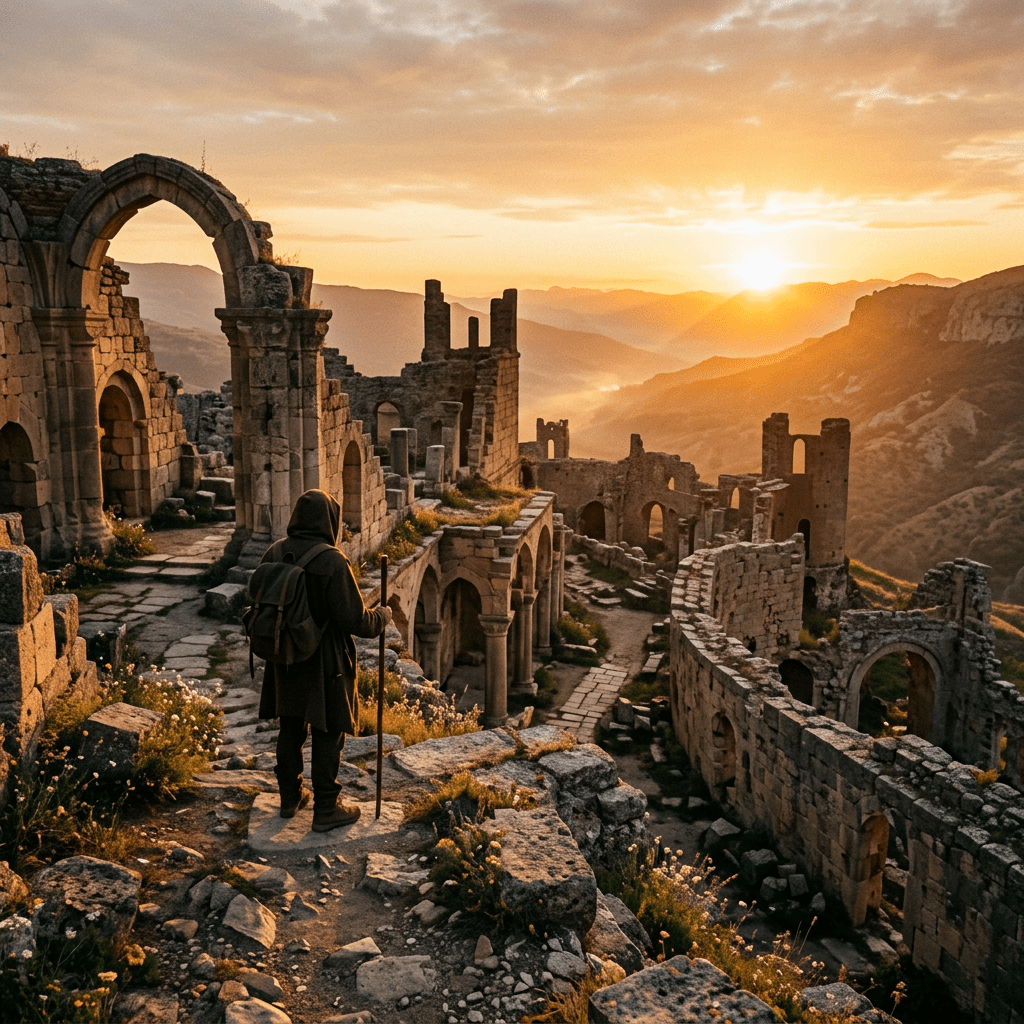
Hold the line. Build the airstrip. Pass the torch. Guard the walls with one hand on the trowel and one hand on the sword. Choose the kingdom that endures.
The Rider is coming.
A Final Word Before Boots Hit the Ground
The men who will read this book and do something with it are the men who are already in motion — who recognized something in Chapter One that told them the campaign was already underway, that the Goliaths were already named, that the choice between the earthly kingdom and the heavenly one was already being pressed by the circumstances of their lives.
For those men: you are not alone in this field. The blood that runs in your veins has been here before — on Kosovo’s plain and in California’s gold fields, in Valley Forge’s frozen mud and on Pranjani’s improvised runway, in the basements where Bibles were read by candlelight when Bibles were illegal and in the frontier churches where the Psalms were sung loud enough to be heard in the woods.
You come from people who held on. Who chose the harder right. Who built the airstrip at night.
Be that man. For the son watching you. For the brother who needs sharpening. For the wife who needs the wall. For the generation that needs to see what endurance looks like with flesh on.
God is with you. That is, as He told Gideon, the whole answer.
On your feet.
Group Conquest: Forming the Brotherhood Cell
Before you put this book down, do one thing.
Name three men in your life who should read it. Not as a book recommendation — as a call to accountability. Send the message. Make the call. Propose the first meeting.
The band of brothers does not assemble itself. David’s thirty-seven gathered around a man who was already moving. The Pranjani farmers came because Mihailović’s men were already in the mountains doing the work. The 20th Maine held Little Round Top because Chamberlain was already there, already holding, already committed before the order was given.
Be that man first. Then the band assembles.
The gates are waiting. Storm them together.
“On his robe and on his thigh he has this name written: KING OF KINGS AND LORD OF LORDS.” — Revelation 19:16
“US and Serbia — Halyard heirs, Tesla’s torchbearers — never war, always warriors, side by side.”

 Lazarevic Ministries