
SLAYING GIANTS
Blood, Faith, and the American-Serbian Warrior’s Way
INTRODUCTION: FORGED IN FIRE
There is a kind of man the modern world no longer knows what to do with.
He doesn’t fit the mold they keep trying to press him into. He’s too blunt for the boardroom, too principled for the culture, too rooted for the drifters, too free for the ideologues. He carries something old in his chest—a stubborn, bone-deep conviction that life is worth fighting for, that faith is worth bleeding for, that family is worth dying for. The world calls this dangerous. We call it inheritance.
This book is written for that man.
More specifically, it’s written for a particular breed of him: the man who carries both American and Serbian blood, or who has been shaped by one tradition and drawn to the other. Because these two peoples—forged in different fires on opposite sides of the Atlantic—share something rare. A warrior’s faith. An anvil’s patience. A refusal to kneel.
The Furnace of History
Yugoslavia, 1945. Tito’s Partisans have won the civil war, and the communist machinery grinds into motion. Churches are padlocked. Crosses are torn from towers. Priests disappear into labor camps in the dead of winter, their crime nothing more than whispering Christ’s name. Farmers who refuse to surrender their land to the collective are branded kulaks—enemies of the state—and hauled away from wives and children who never learn what became of them. Children are rewarded for informing on their fathers.
This was not governance. It was a systematic assault on the human soul.
And yet the faith survived.
In coal-black basements and mountain outposts, men carved crosses into doorframes with pocketknives. Pastors smuggled Communion wafers like contraband. Families memorized Scripture by candlelight when Bibles had been burned in public pyres. Faith, when pressed to the wall, does not always shout. Sometimes it goes underground—and grows roots that no boot can reach.
American Christians of that same era knew a different kind of trial. But in sweat-soaked revival tents from Appalachia to the Texas plains, the same conviction roared: “For to me, to live is Christ, and to die is gain” (Philippians 1:21). Not a sentiment for Sunday mornings. A war cry for every day of the week.
Two traditions. One fire.
Breakup and Exodus
In 1991, the fragile seams of Yugoslavia finally split. Tito had been dead for over a decade, and the “Brotherhood and Unity” he’d held together by force dissolved the moment the force was gone. What followed—Vukovar, Sarajevo, Srebrenica, the Drina—was a fratricidal nightmare that turned neighbors into enemies and turned a generation of young men into refugees.
Serbian fighters who survived that furnace came to American shores not broken, but battle-hardened. They weren’t the first. In the 1800s, their predecessors had poured into California’s gold rush, Chicago’s stockyards, Iowa’s farmland—men with calloused hands and exile songs, building communities from nothing alongside Protestant settlers who’d made their own covenant with the land. They shared something instinctive: the conviction that you plant your flag and you hold it. You don’t ask permission to exist.
George Fisher—born Đorđe Šagić in Serbia in 1795—arrived in Texas long before the revolution and became one of its firebrands. He never stood at the Alamo’s walls, but he helped build the cause that made those walls worth defending. Like Peter after Pentecost, he was a different man on the far side of his own reckoning—no longer cautious, no longer careful, ready to put everything on the line. Our people have always had men like that. Men who crossed oceans with God’s fire in their bones.
Two Rivers, One Source
From Martin Luther’s sola fide thunderclap at Wittenberg, to Sava’s monastic outposts standing firm amid the Ottoman advance—two great rivers of Christian faith flow toward the same ocean. They look different on the surface. One speaks in English, the other in Serbian. One traces its lines through the Reformation, the other through Orthodoxy. But press your ear to the ground and you hear the same heartbeat underneath: Christ is Lord, and His kingdom will not bend to any earthly throne.
Prince Lazar knew this. On the eve of Kosovo Polje in 1389—outnumbered, encircled, staring down the Ottoman empire at the height of its power—he made a choice that has echoed through six centuries of Serbian identity. He chose the heavenly kingdom. Not because the earthly one wasn’t worth fighting for, but because he understood that some battles have to be fought regardless of the outcome, and the manner in which a man fights says more about him than whether he wins.
Meanwhile, across an ocean that didn’t yet know it would one day carry Serbian immigrants, Joshua was circling Jericho. David was loading his sling in the valley. Gideon was thinning his army down to 300 because God told him a full force would steal the glory. The Bible is not a book for the faint-hearted. It is a field manual for men who fight outnumbered.
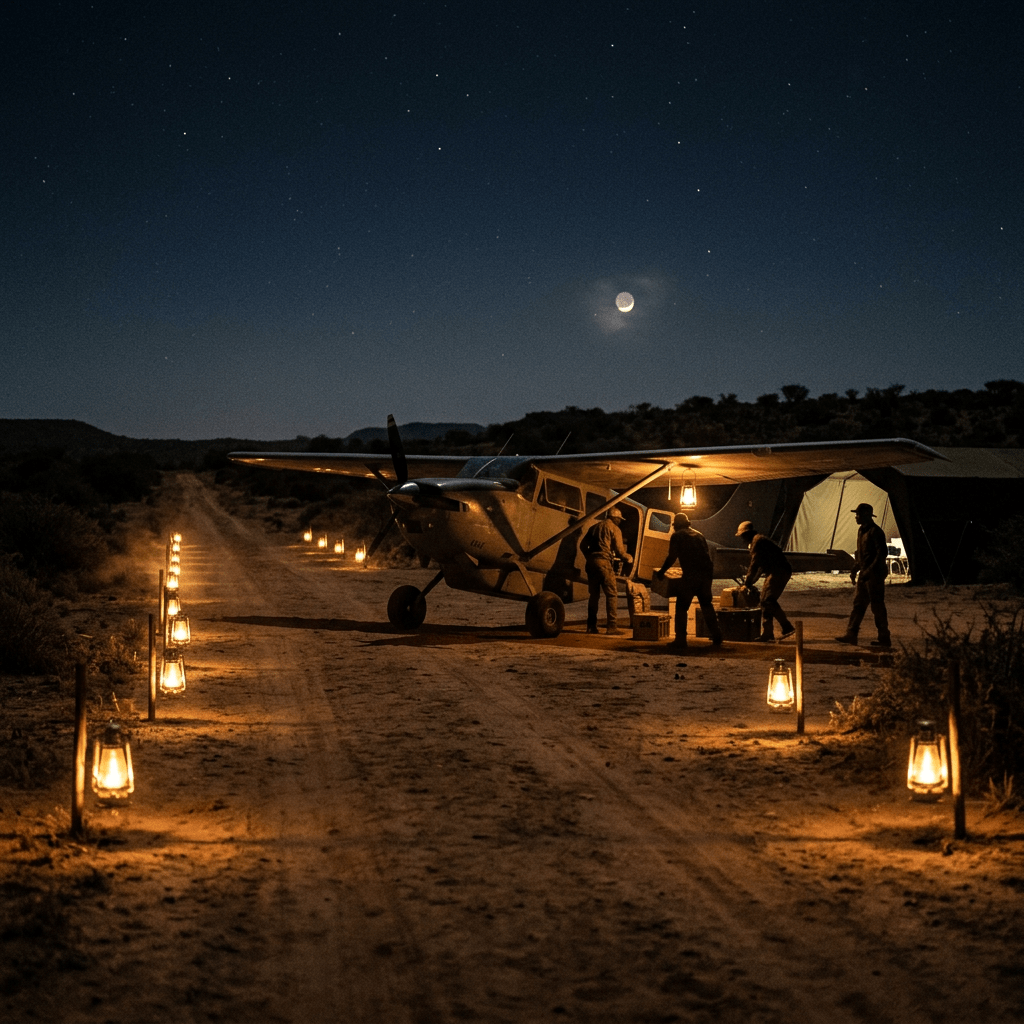
The Halyard Mission of 1944 is the seal on this alliance, written in blood rather than ink. When over 500 American airmen were shot down over Nazi-occupied Yugoslavia, it was Draža Mihailović’s Chetniks—Serbian guerrillas living in caves and moving at night—who got them out. They hacked airstrips from mountainsides. They risked their villages and their lives. They asked for nothing. The Americans who came home from that rescue never forgot it. Neither should we.
Nikola Tesla lit the 20th century. Mihajlo Pupin strung the wires that carried voices coast to coast. The Serbian contribution to American civilization is not a footnote—it’s infrastructure.
“There is neither Jew nor Gentile, neither slave nor free, nor is there male and female, for you are all one in Christ Jesus.” (Galatians 3:28). Blood brothers. Not by sentiment, but by shared foxholes, shared sacrifice, and a shared Savior.
The Wound of 1999
Then came the betrayal.
In 1999, NATO jets—flown by the sons of the men Mihailović’s guerrillas had saved—bombed Belgrade. The bridges that Serbian fighters had bled to hold against German panzers were shredded by weapons built in America. Cluster munitions fell on civilian markets. Depleted uranium soaked into Kosovo’s soil, where children still pay the price in cancer rates and birth defects that a generation of geopolitical spin has never honestly accounted for.
We don’t dwell in that wound. But we swear on it.
America and Serbia must never raise weapons against each other again. The men who went home from Halyard understood something that the diplomats and generals of 1999 forgot: there are bonds that politics cannot dissolve. We are not just allies of convenience. We are kin by covenant—Pupin’s wires, Tesla’s current, and the same nail-scarred banner over both our heads.
The Siege Today
So where does this leave us?
The enemy today doesn’t wear a uniform. He doesn’t mass on the ridge and beat his drums. He works quietly, over years, reshaping the environment so thoroughly that men no longer recognize what they’ve lost until it’s been gone a long time.
Apathy. Addiction. Isolation. The slow erosion of purpose. The voice in the back of your head that says who are you to lead, to love, to stand?
These are your Goliaths.
They are real. They are large. And they are not undefeated—they just haven’t faced the right man yet.
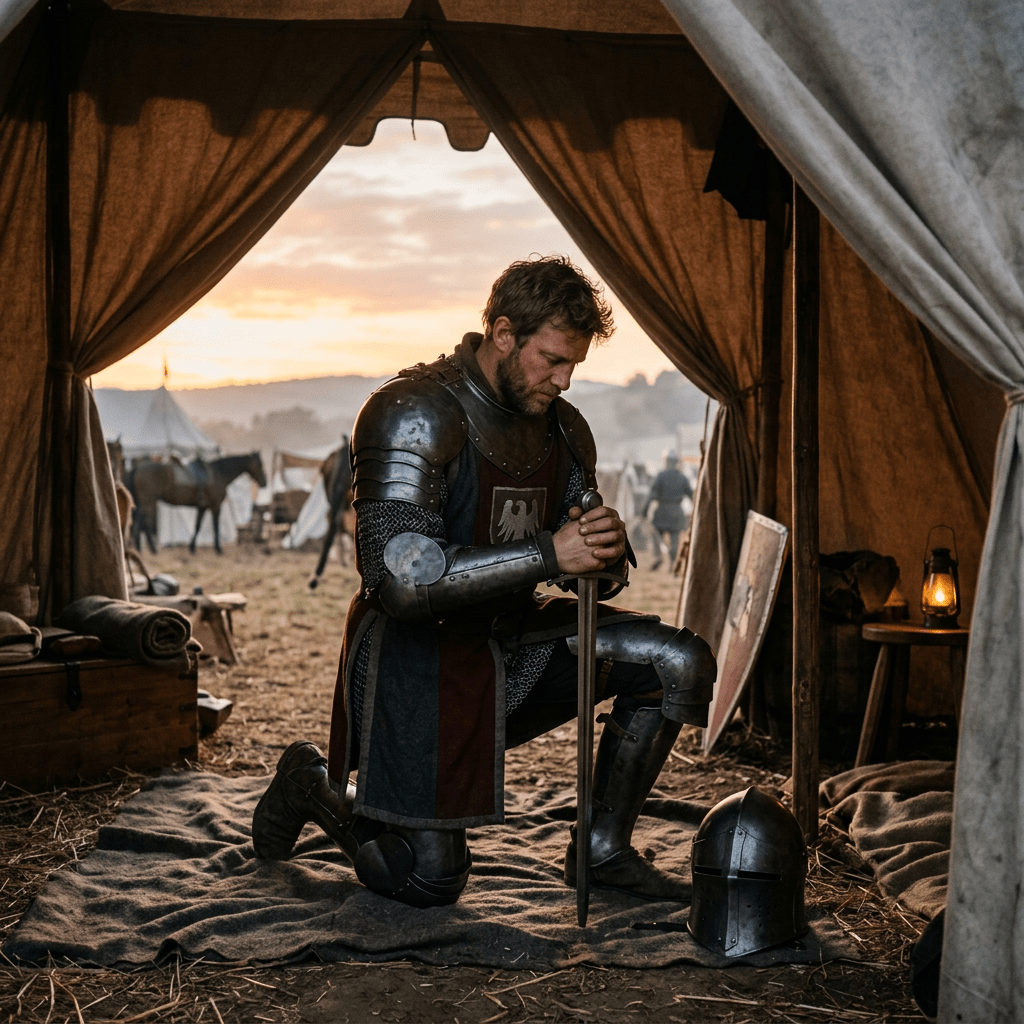
The Apostle Paul wrote his most clarifying words about spiritual warfare from a Roman prison cell. He didn’t soften them for sensitive readers: “Put on the full armor of God” (Ephesians 6:10–18). He meant every word. Not the ceremonial armor of a parade soldier, but the working armor of a man in the field—belt, breastplate, boots, shield, helmet, sword. Each piece earned. Each piece needed.
Samson grabbed a jawbone when that was all he had. David chose five smooth stones and a steady hand. Joshua marched around those walls until they fell. None of them waited for the odds to improve.


 Lazarevic Ministries