CHAPTER SEVEN
The list in 2 Samuel 23 is easy to skip.
Tucked near the end of the book, it reads like a catalogue — names, lineages, brief descriptions of particular acts of valor. Josheb-Basshebeth the Tahkemonite, who killed eight hundred men in a single encounter. Eleazar son of Dodai, who stood and struck the Philistines until his hand grew tired and froze to the sword. Shammah son of Agee, who stood in a field of lentils when the rest of the army fled and defended it alone.
Most Bible readers treat this passage as background material. David’s thirty-seven mighty men are listed by name in a book that contains the Psalms and the Bathsheba narrative — they tend to get skipped.
They shouldn’t.
The list is not filler. It is a record of the community that made David’s kingdom possible. Behind every significant leader in history is a community of specific people whose specific contributions the leader could not have replaced. The names in 2 Samuel 23 are there because they matter — because without these thirty-seven men, the Psalms don’t get written, Jerusalem doesn’t become the capital, the Davidic line through which Christ eventually comes doesn’t hold.
Proverbs 27:17: “As iron sharpens iron, so one person sharpens another.”
The sharpening requires contact. Two pieces of iron sitting in the same room do not sharpen each other. They have to be struck together, under pressure, repeatedly. The process produces sparks and heat and, over time, an edge.
The Halyard Brotherhood
August 1944. In the mountains of Nazi-occupied Yugoslavia, the largest rescue mission of downed airmen in the history of the air war was quietly operating without official Allied recognition.
Draža Mihailović’s Chetniks — guerrillas operating from mountain bases, under German death sentences, with supply lines that barely existed — had been collecting American and British airmen shot down over the Balkans since 1941. By the time Operation Halyard was authorized, there were over five hundred American airmen sheltered in Chetnik territory.
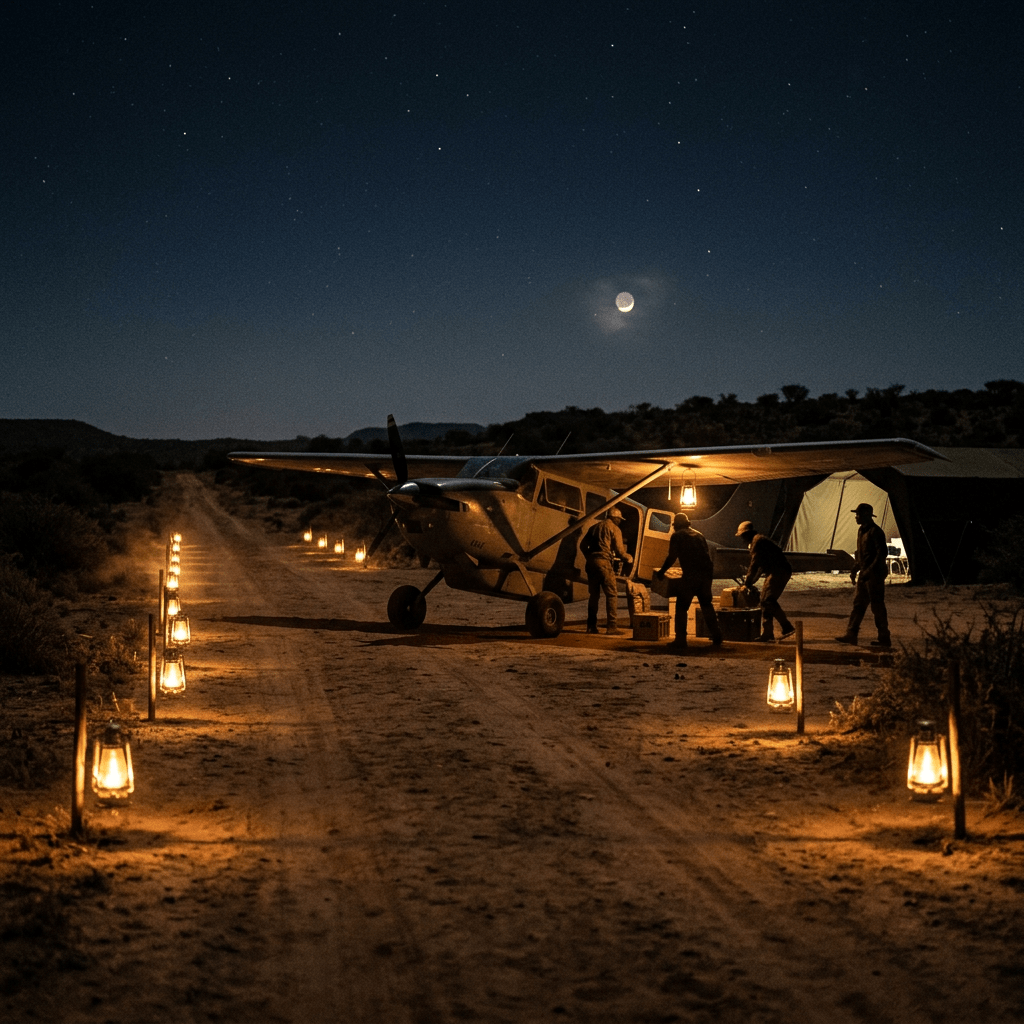
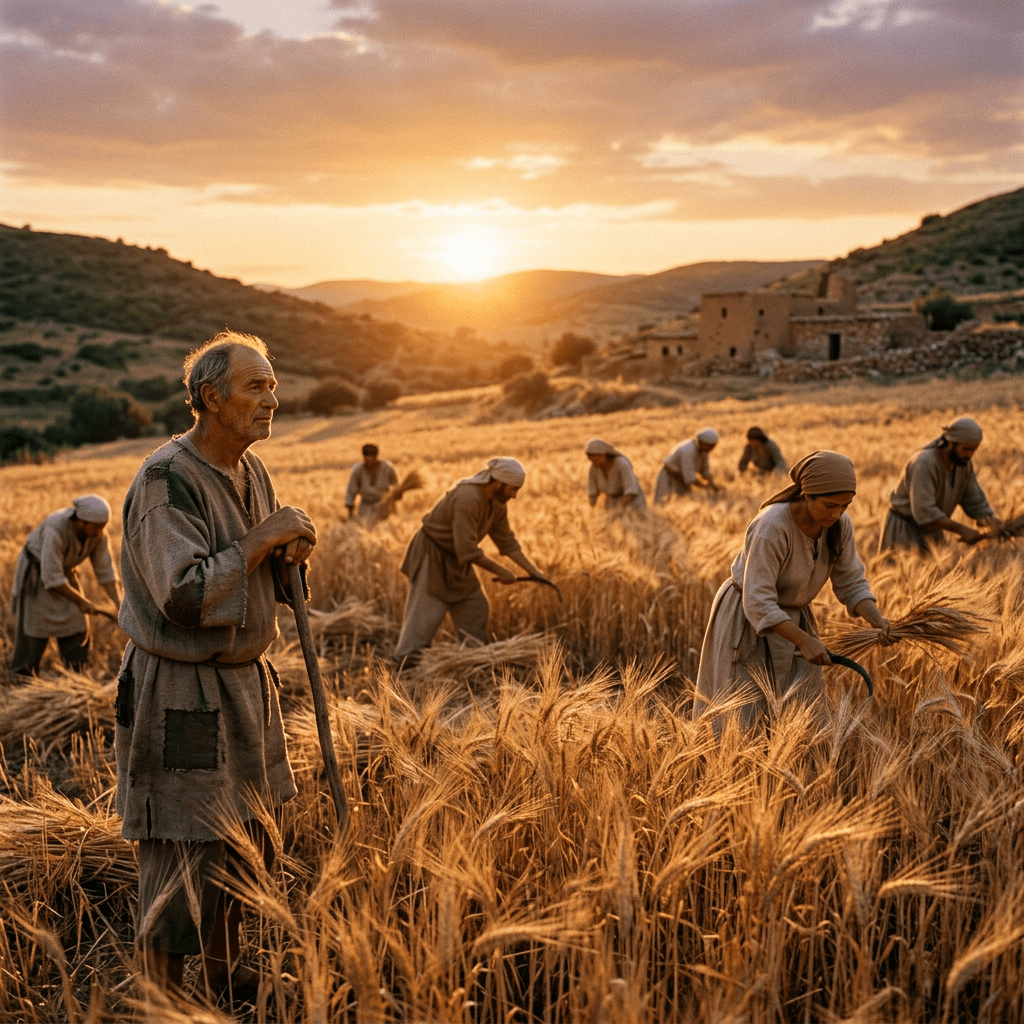
The logistics of the rescue were impossible by any normal analysis. The closest suitable landing area was a plateau near the village of Pranjani, surrounded by German garrisons. The Chetniks had no construction equipment. They had farm tools, dynamite, and thousands of local Serb farmers who came from surrounding villages to hack the plateau flat by hand, working at night to avoid German observation.
They built a dirt airstrip sufficient for C-47 transports in three weeks.
On the first night of operations, August 9, 1944, C-47s flew into the darkness of occupied Yugoslavia and landed on a field built by farmers with shovels. Over the course of several weeks, 512 American airmen were flown out. Not a single man was lost in the rescue operation itself.
The Chetniks asked for nothing. They expected nothing — and historically they received nothing, because the official Allied position had shifted to supporting Tito’s Partisans, and the men who organized and participated in Halyard received no postwar recognition from the governments their rescues served.
But the 512 Americans who came home knew. Their families knew. Their children and grandchildren, many of whom only learned the full story decades later, know now.
This is the texture of brotherhood at its highest expression: sacrifice without expectation of recognition, delivered in the dark, to men you may never see again, because they are your brothers and they are in trouble and you have the capability to help.
What David’s Thirty-Seven Had in Common
The specific exploits of David’s mighty men vary enormously. Some are solo acts of extraordinary individual courage. Some are unit actions. Some are political — the men who managed the logistical and diplomatic machinery of the kingdom.
But they share something. Every man on the list made a choice, at some point, to attach himself to David when attaching yourself to David was not the safe option.
When David was a fugitive in the cave of Adullam, running from Saul, four hundred men came to him. The description of those four hundred is not flattering: “All those who were in distress or in debt or discontented gathered around him.” (1 Samuel 22:2) They were not the winners of Israelite society. They were the outliers, the marginalized, the ones who had nothing to lose.
From those four hundred, over the years of shared hardship and shared fight, thirty-seven emerged as men of extraordinary quality. The formation happened in the wilderness seasons, not in the palace. The brotherhood was built during the years when it was unclear whether David’s cause would prevail — when attaching yourself to him was an act of faith rather than an act of political calculation.
The men on the list didn’t choose David at his peak. They chose him in the valley.
The Squad You Need
Every man reading this should be able to name five people. Not five acquaintances. Five men who:
Know your actual situation — not the performance version, but the reality, including the failures and the Goliaths that haven’t been slain yet.
Tell you the truth. The friend who only affirms is not a friend — he is an audience. You don’t need an audience. You need men who will say I think that’s wrong and I’ve seen that pattern before and here is what I actually see when I look at your life from the outside.
Share your commitments. Not necessarily the same vocation or background or personality type. But the same foundation: the cross, the call, the kingdom. Men who are pulling in the same direction, so that the sharpening is coordinated rather than random.
Show up when it costs them something. The Adullam test: did they choose you in the valley, or only when association with you had benefits?
If you cannot name five such men, the work of this chapter is structural. Before the tactics and the exercises, the baseline infrastructure needs to be built.
The Oath of Halyard
The 500th Bomb Group Association — American airmen who flew over Yugoslavia — and their Serbian counterparts have maintained contact across decades and political upheaval. The story of Halyard was suppressed during the Cold War, because officially acknowledging it would have required acknowledging that the United States had abandoned Mihailović’s forces for political reasons while accepting the military debt they incurred.
The truth came out eventually. It almost always does.
What the Halyard story models for the brotherhood of this book is the power of a kept oath. The Serbian farmers who built that airstrip at night, by hand, under German occupation, were not operating from a cost-benefit analysis. They were operating from a commitment that preceded the specific situation: we protect the innocent. We do not abandon the vulnerable. We pay the cost because it is the right thing and we are the ones positioned to pay it.
For every man in this book who carries American-Serbian heritage, Halyard is the operational expression of your inheritance. The oath is not a sentiment. It is a posture toward every person in your care, every member of your band of brothers, every stranger who needs what you have and cannot repay you for it: I will build the airstrip. At night. With my hands. Even if no one ever records my name.
Brotherhood exercise: Contact one man this week who has been in the valley with you — not the man you’re currently in relationship with, but a man you’ve let drift. Not to catch up. To re-enlist. To say: I know what you’re carrying. I am available. What do you need?
Then do whatever he says.
A Prayer for the Brotherhood
Lord, I was not made for this alone. David knew it; he surrounded himself with thirty-seven specific, named, known men. I need the same. Not an abstraction of community — specific people, with names and faces, who know mine.
Show me who is already positioned around me that I haven’t fully recognized as a brother. Show me where I’ve been too proud, too self-sufficient, too performance-oriented to let anyone close enough to actually sharpen me. And show me who in my current circle I have abandoned to fight alone.
Make me a Chetnik farmer at Pranjani — willing to build the airstrip at night, with my hands, in the dark. For brothers I may not know yet. For the kingdom that requires this kind of invisible work.
In the name of the One who said “I no longer call you servants. I call you friends.” Amen.
“As iron sharpens iron, so one person sharpens another.” — Proverbs 27:17


 Lazarevic Ministries