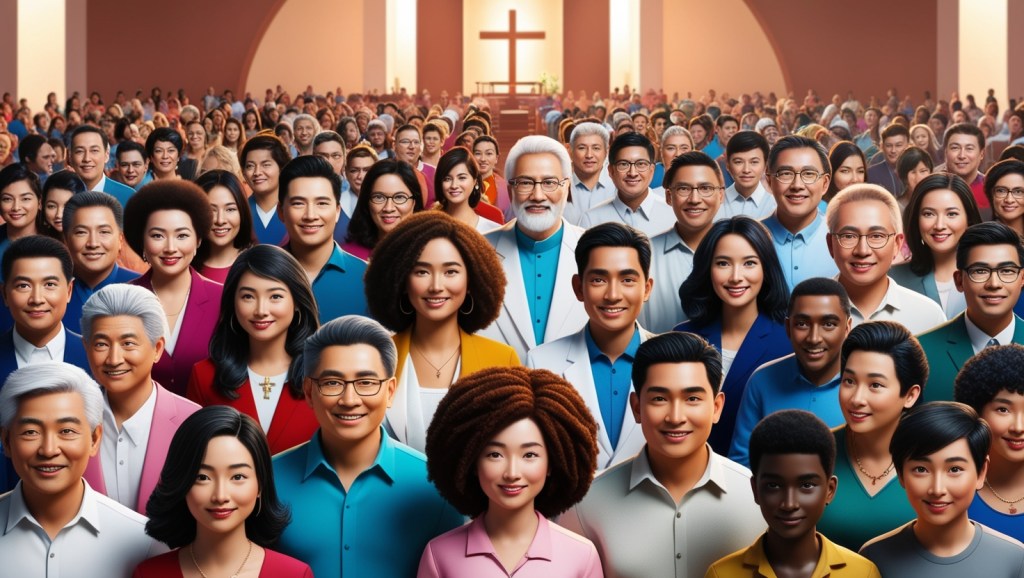
Ephesians 2:19 (KJV):
“Now therefore ye are no more strangers and foreigners, but fellowcitizens with the saints, and of the household of God.”
The concept of unity among nations within the early Christian church was revolutionary, as the church brought together people from various ethnic, social, and cultural backgrounds. Before the coming of Christ, the Jewish people were considered God’s chosen nation, but the New Testament revealed a broader scope of God’s plan for humanity—one that would include all nations and ethnicities in His kingdom.
Breaking Down Barriers: Jews and Gentiles
One of the most significant divisions that the early church addressed was between Jews and Gentiles. Jews had long regarded Gentiles (non-Jews) as outsiders to God’s covenant, and this division was deeply rooted in religious, cultural, and legal traditions. However, with the coming of Jesus Christ, the apostles, particularly Paul, emphasized that faith in Christ was now the unifying factor, breaking down these barriers.
- Ephesians 2:14 (KJV): “For he is our peace, who hath made both one, and hath broken down the middle wall of partition between us.”
Paul writes that Christ has removed the “wall” that separated Jews and Gentiles. This refers not only to literal divisions like the barrier in the temple that separated Jews from Gentile worshippers but also to spiritual and cultural divisions.
In Ephesians 2:19 (KJV), Paul elaborates on this newfound unity:
- “Now therefore ye are no more strangers and foreigners, but fellowcitizens with the saints, and of the household of God.”
Paul declares that through Christ, Gentiles who were once regarded as strangers and outsiders are now part of God’s household—equal with Jewish believers. This inclusion wasn’t based on nationality or ethnic background but on faith in Jesus Christ, making them full members of God’s covenant family.
Inclusivity and the New Covenant
The New Testament’s message of inclusivity goes far beyond nationality or race, extending to all divisions of society—gender, social status, and wealth. Paul emphasizes this in several key passages:
- Galatians 3:28 (KJV): “There is neither Jew nor Greek, there is neither bond nor free, there is neither male nor female: for ye are all one in Christ Jesus.”Here, Paul emphasizes that distinctions like ethnicity, social class, and gender no longer determine one’s standing before God. In Christ, believers are unified and equal, reflecting the New Covenant’s inclusivity.
- Colossians 3:11 (KJV): “Where there is neither Greek nor Jew, circumcision nor uncircumcision, Barbarian, Scythian, bond nor free: but Christ is all, and in all.”
The early church was called to be a community where former divisions were overcome through unity in Christ. The phrase “Christ is all, and in all” speaks to the profound reality that all believers, regardless of their background, share in the same spiritual blessings through Christ.
The Practical Outworking of Unity
This teaching of unity among nations wasn’t merely a theological idea—it had practical applications. The early church had to deal with the cultural tensions and divisions that naturally arose in a diverse group of people. Paul often addressed these tensions in his letters, calling for love, patience, and understanding among believers:
- Romans 10:12 (KJV): “For there is no difference between the Jew and the Greek: for the same Lord over all is rich unto all that call upon him.”
Paul urged the Roman church, composed of both Jews and Gentiles, to embrace their shared faith and equal standing before God. He made it clear that the same God who offers salvation is “Lord over all,” and no group has a privileged position over another.
The early church demonstrated this unity by sharing resources, supporting one another in times of persecution, and welcoming believers from all backgrounds. For example, when a famine struck, the Gentile believers in Antioch sent aid to the Jewish believers in Judea (Acts 11:27-30), a profound display of their commitment to unity and mutual support.
Application Today: The Church as a Unified Body
The message of unity in the New Testament continues to be relevant for the modern church. The global church today is made up of people from every nation, culture, and ethnicity, reflecting the inclusivity of the gospel. Believers are called to live in harmony, breaking down barriers of prejudice, discrimination, and division within the body of Christ.
- Revelation 7:9 (KJV): “After this I beheld, and, lo, a great multitude, which no man could number, of all nations, and kindreds, and people, and tongues, stood before the throne, and before the Lamb, clothed with white robes, and palms in their hands.”
This vision in Revelation points to the ultimate fulfillment of God’s plan for unity among the nations: a future where people from every tribe and language will worship together in unity before God’s throne.
Conclusion
The early church’s unity among nations, as taught in passages like Ephesians 2:19, laid the foundation for a global and inclusive body of believers. This unity, based on faith in Christ rather than cultural or ethnic identity, remains a core principle of the Christian faith. The church is called to reflect this unity by breaking down barriers and embracing all people, regardless of their background, as members of God’s family.






 Lazarevic Ministries
One response to “Embracing Diversity in Church: Ephesians 2:19 Explained”
Amen ❤
LikeLike